“A good starter cheese. Plus you have the satisfaction of making it yourself! If you have a recipe where fresh ricotta is the star of the show, it is well worth the effort to buy a high quality ‘cream on the top’ organic whole milk and make it from scratch. It doesn’t take long and the taste is out of this world. It also makes great cheese ravioli when mixed with fresh herbs like basil and oregano.” – April Ferre
Ricotta (Whole Milk Method)
Ingredients
- 2 Quarts Whole Milk See Note 1
- 3 Tablespoons White Vinegar
- -Or 1/4 Cup Fresh, Strained Lemon Juice Not Meyer, See Note 2
- 1/4 to 1/2 Teaspoon Salt
- Heavy Cream Optional, But Recommended
- Chopped Fresh Herbs Optional
Instructions
- In a heavy pot, over direct heat, heat 2 quarts of whole milk to 200 degrees.
- Add vinegar or lemon juice and bring the temperature back up to 200 degrees. You will see very tiny white particles (albumin protein) floating in the whey. Do not stir or your curds will clump and become rubbery.
- Remove the pot from the heat and set it, covered, to rest undisturbed for about 15 minutes.
- Line a colander with very fine cheesecloth (butter muslin, not regular cheesecloth.) Tie the ends of the cheesecloth together and hang the ricotta to drain for an hour. The longer you hang it, the drier your finished cheese will be.
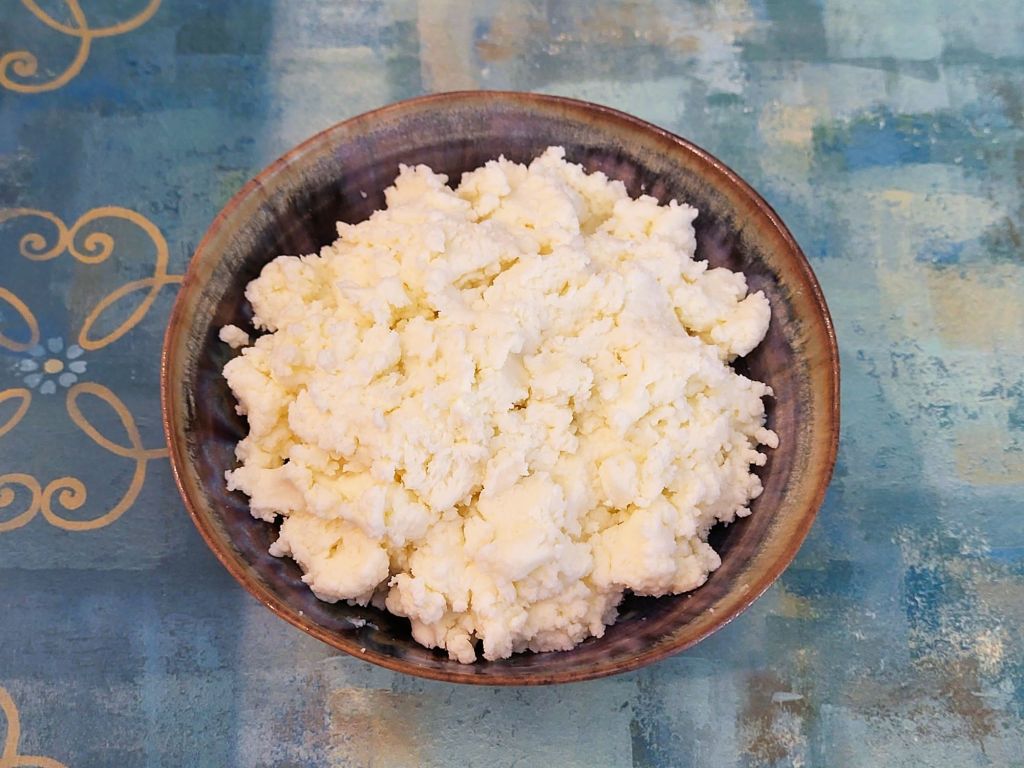
- When it has drained, place the ricotta in a bowl and add salt to taste.
- Add a little cream for richer cheese, also add some fresh herbs if desired.
- This ricotta will keep for about a week in the fridge. Makes approximately 1 1/2 cup.
Troubleshooting:
- If you end up with rubbery curds, you can try to salvage it by placing the curds in a high-powered blender to break up the curds into small pieces.
- Slowly drizzle in some heavy cream, a little at a time, until the desired consistency is achieved.
Notes
1. Use only high quality, minimally processed whole milk. Do not use skim or 2% or anything that is labeled “ultra-pasteurized.”
2. Use white vinegar for a neutral taste and savory applications; use lemon juice for a more fruity taste with sweet applications.
3. This ricotta will be drier and not as smooth and creamy as the traditional ricotta made from whey, but is still a good substitute in most recipes.
2009 Recipe – Calla and April Ferre – From Home Cheese Making by Ricki Carroll, 2002. and Fiasco Farm